
In short
Four Phoenix battery safe series, from a 100Wh single-pack unit to a 22,500Wh charging cabinet. Every figure on these pages comes from the manufacturer’s own specification sheet. Where a sheet does not state something — a fire duration, a watt-hour capacity, an outlet count — the page says so rather than filling the gap.
These are information pages. There is no checkout here: current pricing and availability sit with SimplySafes, and anything involving installation, ducting or several sites is better handled as a specification review than as an order.
Read this before you compare
One distinction runs through the whole range and it is the thing worth understanding first. Only the BS1940 Battery Commander Pro is certified to VDMA 24994:2024-08, the specification that tests a thermal runaway started inside the cabinet. The other three series state fire, impact and security certification, and the BS1930 states 90-minute fire protection — but none of them carries a VDMA 24994 claim on its specification sheet.
That does not make the other three unsuitable. It means they are evidenced against a different scenario, and you should know which one you are buying. The standards comparison explains why the direction of the test matters more than the number of minutes.
The range
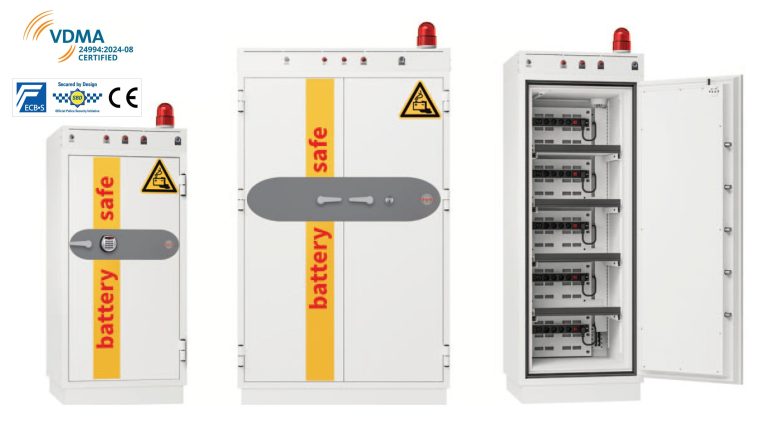
Phoenix BS1940 Battery Commander Pro
The only series here certified to VDMA 24994:2024-08. Six sizes from 2,500Wh to 22,500Wh total capacity, with electronic monitoring that cuts charging power on overheat.
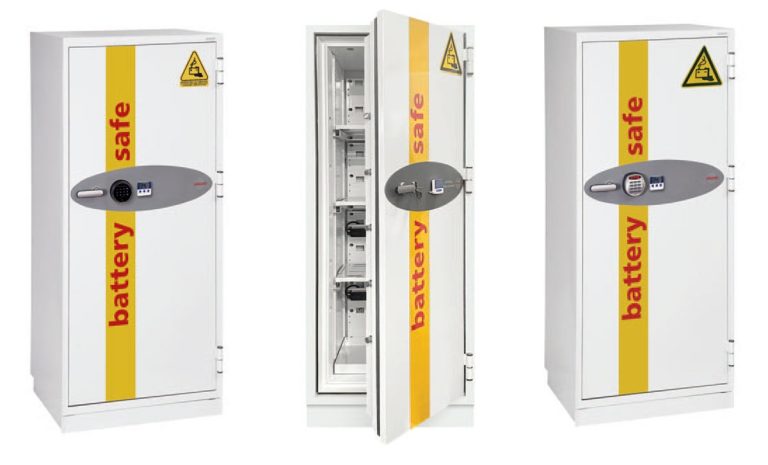
Phoenix BS1930 Battery Commander
Large-volume storage and charging with a 338-litre interior, three shelves and a smoke detector. 90-minute fire protection; no VDMA 24994 certification is claimed.
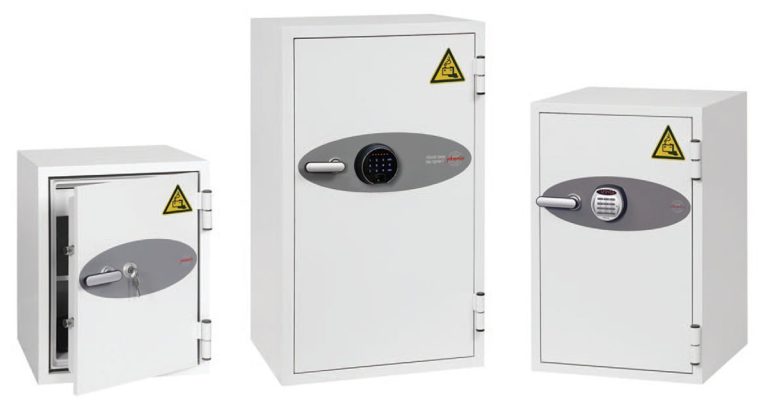
Phoenix BS0440 Battery Fighter
Three sizes from 63 to 163 litres for smaller quantities, with an internal drawer, integrated smoke sensor and key, electronic or fingerprint locking.
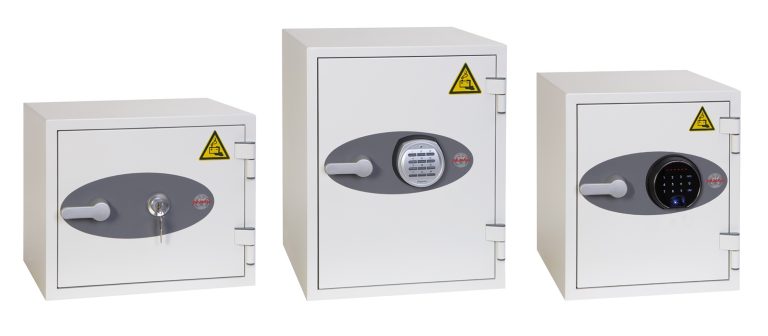
Phoenix BS1280 Battery Titan
The smallest range, rated for a maximum battery capacity of 100Wh, 200Wh or 350Wh. For single packs and small tool batteries rather than e-bike packs.
A note on capacity units
The BS1280 and BS1940 series publish capacity in watt-hours. The BS0440 and BS1930 series publish it in litres. Those measure different things and cannot be converted into one another: litres tell you what will physically fit, watt-hours tell you how much energy a failure has to release. Work out your own watt-hour total first — it takes about ten minutes — and use volume only for checking fit.
Frequently asked questions
Why are there no prices?
Because they date quickly, and because for the larger cabinets the installed cost depends on ducting, power supply and siting rather than on the cabinet. SimplySafes lists current prices for the standard sizes. For anything that needs installing, ask for a specification review and the figure will come with its assumptions attached.
Which one do I need?
Start from your total watt-hours and whether you charge in place. If you would rather be pointed somewhere, the four-question selector gets you to the right half of the range in about a minute. Broadly: BS1280 for a single pack or a few tool batteries, BS0440 for a small workshop, BS1930 for volume storage, BS1940 where charging at scale and certified containment both matter.
Is a cabinet the first thing I should buy?
Usually not. Controlling what chargers come on site, moving charging off escape routes and separating damaged cells all reduce risk more per pound spent, and none of them requires a purchase. A cabinet contains a failure rather than preventing one — worth having, and worth having in the right order. See the order of controls.